
Dashboards Versus Breakthroughs

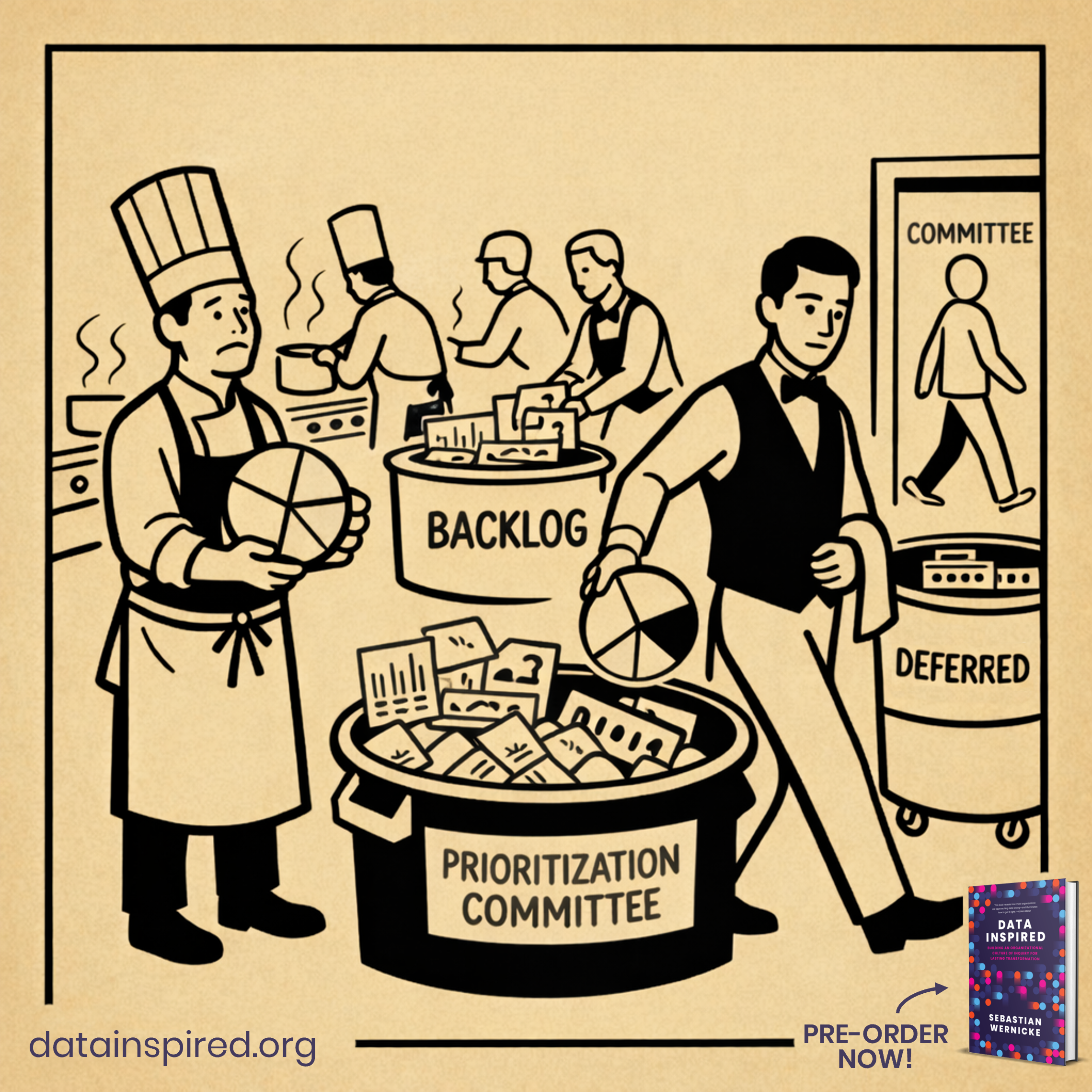
The best data and AI professionals are natural experimenters. They think in systems, hypotheses, and iterations. But most corporate structures reward the opposite: consensus over conviction, process over progress. They prefer a slide deck that confirms what’s already believed over a data-driven test that forces change.
The organizations winning the talent war in the AI age will engineer their culture for velocity. They understand that the half-life of an insight is measured in days, not quarters. Conversely, organizations hemorrhaging talent will often share a common trait: sophisticated data capabilities paired with inadequate decision architectures. They generate insights at lightning speed but move on them at a bureaucratic pace.
Retention in the age of AI isn’t about the size of the signing bonus. It’s about creating environments where a well-designed piece of analysis can overturn a senior executive’s assumption. When “we need more data” becomes code for “we’re not ready to act,” or when a pretty dashboard is prioritised over revamping a legacy process, the environment becomes toxic to high-performers.
There’s a common myth that the most talented people in data and AI are only interested in solving complex puzzles. They aren’t. They crave the dopamine hit of impact. When a lead scientist spends months fine-tuning a model that could revolutionize a supply chain, only to watch it get buried under six months of stakeholder alignment, their engagement dies. They didn’t sign up to produce reports or fill dashboards, they signed up to build engines of change.
The war for talent is won in meeting rooms where data changes minds, in cultures that reward intellectual courage, and in organizations brave enough to let their people prove them wrong. Failure must be treated as data, too, not career suicide.
None of this means every “we need more data” is cowardice in disguise. In regulated industries, in decisions with serious downside risk, and in models whose failure modes aren’t yet well understood, caution is the job. The distinction that matters is whether the pause is doing real work (stress-testing assumptions, pressure-checking edge cases) or whether it’s a socially acceptable way to avoid a decision nobody wants to own. High performers can tell the difference.
Move your organization toward a culture that possesses the organizational courage to act on data when action is warranted, valuing “I don’t know, let’s find out” over “I guarantee this will work.” Empower your teams to overturn assumptions and ensure their work builds engines of change rather than filling a dashboard graveyard.
If your AI strategy produces more dashboards than breakthroughs, you don’t have a data problem. You have a wiring problem in your decision architecture.
